
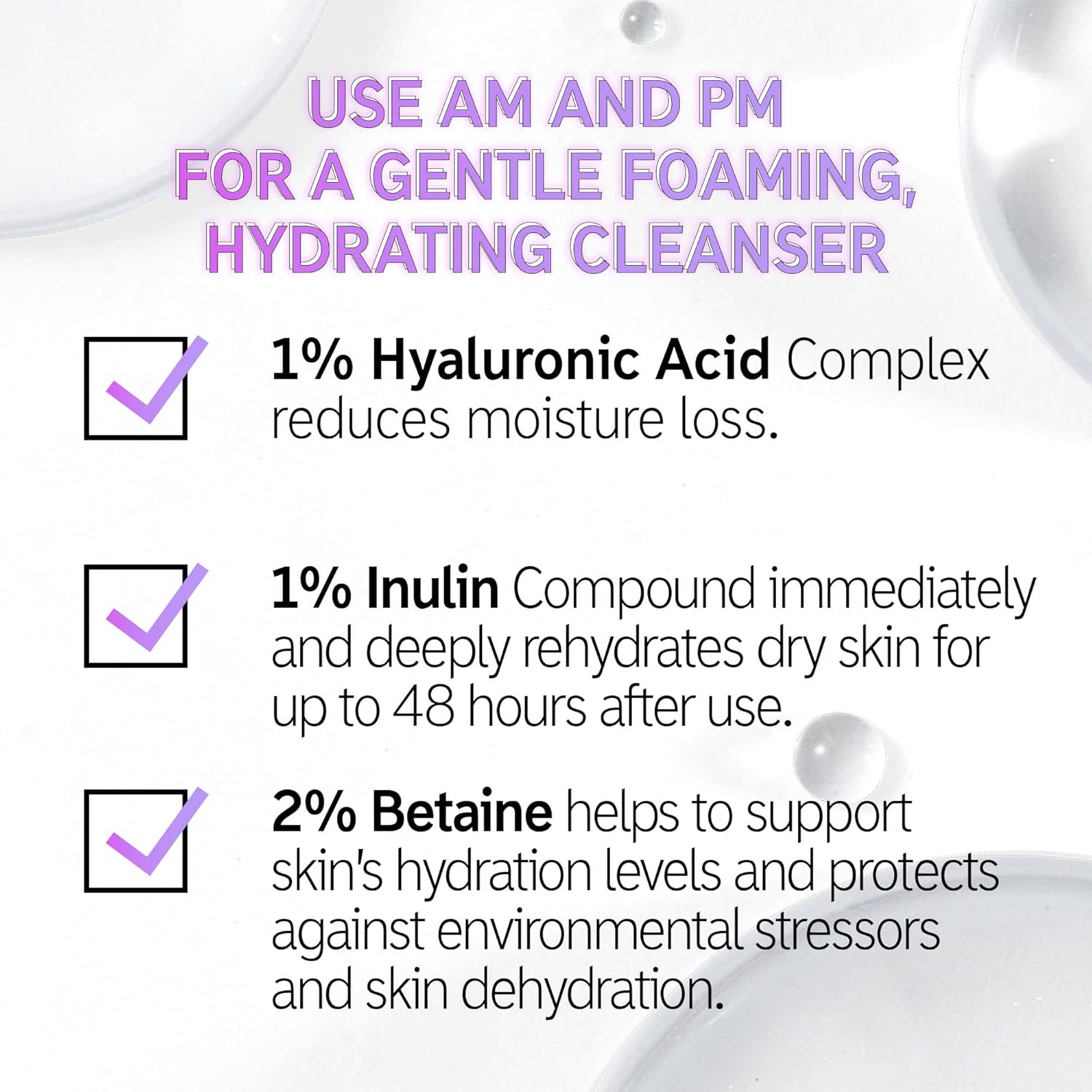


The INKEY List Hyaluronic Acid Cleanser, Daily Hydrating Face Cleanser, Helps Hydrate Skin and Lock In Moisture, Removes Makeup, For All Skin Types, 5 fl oz
Customers have reported significant improvement in their skin condition after using this cleanser. It effectively tackles acne, reduces oiliness, and leaves skin feeling clean and refreshed.
Gentleness
Many customers with sensitive skin have praised the gentle formula of this cleanser. It does not cause irritation or dryness, making it suitable for daily use.
Lather
Customers appreciate the rich lather that this cleanser produces, making it easy to spread and massage onto the skin. The creamy texture adds to the luxurious feel of the product.
Customer Reviews
Hormonal Acne
Customers dealing with hormonal acne have found relief with this cleanser. It helps to control breakouts and improve overall skin texture.
Scent
Several customers appreciate the fact that this cleanser is fragrance-free, as it reduces the risk of irritation for those with sensitive skin or allergies to scents.
Overall Rating
Based on customer reviews, this cleanser has received high ratings for its effectiveness, gentleness, and overall performance. The majority of users have been satisfied with the results they’ve seen.

When it comes to shopping on Amazon, one of the most important factors to consider is the overall star rating of a product. This rating is a quick and easy way to gauge the quality and reliability of a product before making a purchase. But have you ever wondered how Amazon calculates these star ratings?
To calculate the overall star rating of a product, Amazon doesn’t just take a simple average of all the individual ratings. Instead, their system takes into account a variety of factors to ensure that the rating is as accurate and reliable as possible.
One of the key factors that Amazon considers is the recency of a review. Reviews that are more recent are given more weight in the calculation of the overall star rating, as they are likely to be more reflective of the current quality of the product.
Another important factor is whether the reviewer actually purchased the item on Amazon. Reviews from verified purchasers are generally considered to be more trustworthy and are given more weight in the calculation of the star rating.
In addition to these factors, Amazon also analyzes the content of reviews to verify their trustworthiness. Reviews that are flagged as potentially biased or unreliable are not given as much weight in the calculation of the star rating.
Overall, Amazon’s system for calculating star ratings is designed to provide shoppers with the most accurate and reliable information possible. So the next time you’re browsing for a new product on Amazon, be sure to take a close look at the star rating and consider all the factors that go into calculating it. When it comes to shopping online, one of the most important factors to consider is the overall star rating of a product. This rating is a quick and easy way to gauge the quality and satisfaction level of a particular item. However, it’s important to remember that not all star ratings are created equal.
At Amazon, they have a sophisticated system in place to calculate the overall star rating for each product. This system takes into account a variety of factors, including the recency of a review and whether or not the reviewer actually purchased the item on Amazon. By analyzing these reviews and verifying their trustworthiness, Amazon is able to provide customers with an accurate and reliable star rating.
So, why is this important for shoppers? Well, by taking into consideration the recency and trustworthiness of reviews, Amazon is able to give a more accurate representation of a product’s quality. This means that when you see a high star rating on an Amazon product, you can trust that it’s based on real feedback from real customers.
In conclusion, when shopping on Amazon, it’s important to pay attention to the overall star rating of a product. By considering factors like recency and trustworthiness, you can make more informed purchasing decisions and feel confident in the quality of the items you’re buying. So next time you’re browsing Amazon, be sure to look for that star rating and trust that it’s a true reflection of the product’s quality. When shopping on Amazon, it’s important to not only look at the overall star rating of a product but also to delve deeper into the individual reviews to get a better understanding of its quality. The star rating is a helpful starting point, but it doesn’t always tell the full story.
To calculate the overall star rating, Amazon takes into account a variety of factors including the number of reviews and the average rating given by customers. This can give you a general idea of how well-liked a product is overall. However, it’s important to remember that everyone’s preferences are different, so what works for one person may not work for another.
In addition to the star rating, Amazon also provides a percentage breakdown by star. This can give you a more detailed look at how many people rated the product highly versus those who rated it poorly. For example, a product may have a 4-star rating, but if the breakdown shows that 80% of reviewers gave it 5 stars, you can be more confident in its quality.
Another important factor to consider when looking at reviews on Amazon is the recency of the review. A product may have a high star rating, but if all of the positive reviews are several years old, it’s possible that the quality of the product has changed since then. By looking at the date of the reviews, you can get a better sense of how relevant they are to your current purchasing decision.
Finally, Amazon’s system also analyzes reviews to verify trustworthiness. This helps to weed out fake or biased reviews, giving you a more accurate picture of what real customers think about the product. It’s always a good idea to read through a variety of reviews before making a purchase to get a well-rounded understanding of the product.
In conclusion, while the star rating is a helpful tool for quickly gauging a product’s overall quality, it’s important to dig deeper into the individual reviews to get a more comprehensive understanding. By considering factors like the percentage breakdown by star, the recency of the reviews, and Amazon’s trustworthiness analysis, you can make a more informed purchasing decision. Happy shopping! When shopping on Amazon, one of the key factors to consider before making a purchase is the overall star rating of a product. But did you know that the star rating is calculated based on various factors, including the recency of a review and whether the reviewer actually bought the item on Amazon?
At Amazon, the star rating system is designed to provide shoppers with an accurate representation of a product’s quality and performance. This means that the star rating you see next to a product is not just a simple average of all the reviews it has received. Instead, Amazon’s system takes into account factors such as how recent a review is and whether the reviewer is a verified purchaser.
One of the ways Amazon ensures the credibility of its star ratings is by analyzing reviews to verify their trustworthiness. This helps prevent fake or biased reviews from influencing the overall rating of a product. By looking at factors like the language used in a review and the reviewer’s history of leaving feedback, Amazon can determine whether a review is reliable and should be factored into the star rating calculation.
So the next time you’re browsing Amazon and considering a purchase, be sure to take a closer look at the star rating and read some of the reviews to get a better understanding of the product’s quality. And remember, the star rating is more than just a number – it’s a reflection of real feedback from verified customers who have had firsthand experience with the product. When shopping online, one of the most important factors to consider is the reviews and ratings of a product. This is especially true on a platform like Amazon, where there are thousands of products to choose from in any given category. One feature that Amazon offers to help customers make informed purchasing decisions is the overall star rating and percentage breakdown by star.
To calculate the overall star rating, Amazon takes into account all of the reviews that a product has received. Each review is assigned a star rating, ranging from one to five stars. The average of all of these star ratings is then calculated to determine the overall rating of the product. This allows customers to quickly see at a glance how well a product has been received by other shoppers.
In addition to the overall star rating, Amazon also provides a percentage breakdown by star. This breakdown shows the percentage of reviews that fall into each star category. For example, a product may have 70% of its reviews rated as five stars, 20% as four stars, and 10% as three stars. This breakdown gives customers a more detailed look at the distribution of ratings and can help them understand the strengths and weaknesses of a product.
When considering the reviews and ratings of a product on Amazon, it’s important to remember that the system takes into account factors such as the recency of a review and whether the reviewer actually purchased the item on Amazon. This helps to ensure that the reviews are trustworthy and accurate, giving customers confidence in their purchasing decisions.
In conclusion, the overall star rating and percentage breakdown by star on Amazon are valuable tools for customers looking to make informed purchasing decisions. By considering these ratings and reviews, shoppers can quickly assess the quality of a product and make a confident choice when making a purchase. When shopping on Amazon, one of the most important factors to consider is the overall star rating of a product. However, it’s important to remember that this rating is not just a simple average – there are many factors that go into determining the overall rating and percentage breakdown by star.
Our system takes into account a variety of factors when calculating the overall star rating of a product. One of the key factors we consider is the recency of a review. We give more weight to reviews that are more recent, as they are likely to be more reflective of the current quality of the product.
Another important factor we consider is whether or not the reviewer actually purchased the item on Amazon. Reviews from verified purchasers are given more weight in our calculations, as they are more likely to be genuine and trustworthy.
In addition to these factors, our system also analyzes reviews to verify their trustworthiness. We look for patterns in the reviews that may indicate that they are fake or manipulated in some way. By identifying and discounting these reviews, we are able to provide a more accurate overall star rating for each product.
So the next time you’re shopping on Amazon, be sure to take a close look at the overall star rating and percentage breakdown by star. Our system works hard to ensure that you are getting the most reliable and trustworthy information possible, so you can make an informed decision about your purchase. When shopping online, one of the key factors that consumers consider before making a purchase is the overall star rating of a product. This rating is often based on customer reviews and can provide valuable insight into the quality and performance of the item. However, it’s important to remember that not all star ratings are created equal.
At Amazon, we take a unique approach to calculating star ratings to ensure that our customers receive the most accurate and trustworthy information possible. Our system goes beyond a simple average and takes into account a variety of factors to determine the overall rating of a product.
One of the key factors that our system considers is the recency of a review. We understand that products can change over time, so we give more weight to recent reviews to ensure that our customers are getting the most up-to-date information. This helps to prevent outdated reviews from skewing the overall rating of a product.
In addition to recency, our system also takes into account whether the reviewer purchased the item on Amazon. This helps to verify the authenticity of the review and ensure that it comes from a legitimate customer. By analyzing reviews for trustworthiness, we can provide our customers with a more reliable rating that they can trust.
Overall, our star rating system is designed to provide our customers with the most accurate and trustworthy information possible. By considering factors like recency and reviewer verification, we aim to give our customers the confidence they need to make informed purchasing decisions. So next time you’re shopping on Amazon, rest assured that our star ratings are calculated with your best interests in mind. When shopping on Amazon, it’s important to pay attention to the star rating and reviews of a product to ensure you are making a smart purchase decision. The star rating is a quick way to gauge the overall satisfaction of customers who have bought and used the product. However, it’s important to dig deeper and look at the percentage breakdown by star to get a more detailed understanding of what customers liked and didn’t like about the product.
At Amazon, the star rating is not just a simple average of all the reviews. The system takes into account factors such as the recency of a review and whether the reviewer actually purchased the item on Amazon. This helps to ensure that the star rating is a true reflection of the product’s quality and performance.
In addition to the star rating, Amazon also provides a percentage breakdown by star. This breakdown shows the distribution of reviews across different star ratings, giving you a more nuanced view of customer satisfaction. For example, a product may have a high overall star rating, but a closer look at the percentage breakdown may reveal that a significant number of customers gave it a low rating. This can help you identify potential issues or drawbacks with the product that may not be immediately apparent from just looking at the star rating.
By analyzing reviews and looking at the star rating and percentage breakdown, you can make a more informed decision about whether a product is right for you. Whether you’re looking for a new gadget, kitchen appliance, or beauty product, taking the time to read reviews and understand the star rating can help you avoid disappointment and ensure you get the best value for your money.
So next time you’re shopping on Amazon, don’t just rely on the star rating alone. Take a closer look at the percentage breakdown by star and read reviews to get a comprehensive picture of the product’s performance and quality. Happy shopping! When it comes to shopping online, one of the biggest factors that influences our purchasing decisions is the star rating of a product. We want to know what other people think about it, whether they had a positive or negative experience, and if it’s worth our hard-earned money. But have you ever wondered how exactly that star rating is calculated on Amazon?
To calculate the overall star rating of a product on Amazon, the platform uses a complex algorithm that takes into consideration various factors. One of the main things it looks at is the average rating given by customers who have purchased and reviewed the product. This average is then rounded to the nearest half-star, resulting in the final star rating you see on the product page.
But it doesn’t stop there. Amazon also takes into account the recency of the reviews. A recent review is given more weight than an older one, as it reflects the current quality and satisfaction level of the product. This helps ensure that the star rating is a true representation of the product’s performance over time.
Another important factor that Amazon considers is whether the reviewer actually purchased the item on Amazon. This helps prevent fake or biased reviews from influencing the star rating, making it more trustworthy and reliable for potential buyers.
In addition to these factors, Amazon’s algorithm also analyzes the content of the reviews to verify their trustworthiness. It looks for patterns, language, and other indicators that may suggest a review is fake or manipulated. By doing this, Amazon strives to maintain the integrity of its star rating system and provide customers with accurate and helpful information.
So the next time you’re browsing through Amazon and checking out the star ratings of products, remember that a lot goes into calculating those ratings. From average ratings and review recency to reviewer verification and trustworthiness analysis, Amazon’s algorithm works hard to ensure that you’re getting the most reliable and informative star rating possible. When shopping on Amazon, one of the most important factors to consider before making a purchase is the star rating and percentage breakdown of a product. These ratings provide valuable insight into the quality and reliability of a product, helping consumers make informed decisions.
At Amazon, the overall star rating is calculated based on a variety of factors, including the number of reviews a product has received and the average rating of those reviews. This helps give shoppers a quick snapshot of how well a product is performing in the eyes of other customers.
In addition to the star rating, Amazon also provides a percentage breakdown by star, showing the distribution of ratings across different levels. This can be particularly helpful in understanding the strengths and weaknesses of a product, as well as any common issues or concerns that other customers have experienced.
One key aspect of Amazon’s rating system is that it takes into account the recency of reviews and whether the reviewer actually purchased the item on Amazon. This helps ensure that the ratings are accurate and reliable, giving shoppers confidence in the overall rating of a product.
When analyzing reviews, Amazon also verifies the trustworthiness of each review to prevent fake or biased reviews from influencing the rating. This helps maintain the integrity of the rating system and ensures that shoppers can trust the feedback they are receiving from other customers.
In conclusion, the star rating and percentage breakdown provided by Amazon are valuable tools for shoppers looking to make informed decisions about their purchases. By considering these ratings and analyzing reviews, consumers can feel confident in their choices and find products that meet their needs and expectations. When shopping on Amazon, one of the most important factors to consider before making a purchase is the overall star rating and percentage breakdown by star. These ratings and reviews provide valuable insight into the quality and performance of a product, helping consumers make informed decisions.
At Amazon, the star rating system is a key tool for evaluating products. The star rating is calculated based on the average score given by customers who have purchased and reviewed the product. A higher star rating indicates that the majority of customers were satisfied with their purchase, while a lower star rating may suggest potential issues with the product.
In addition to the overall star rating, Amazon also provides a percentage breakdown by star. This breakdown shows the distribution of ratings among customers, giving a more detailed picture of how satisfied customers are with the product. For example, a product with a high percentage of 5-star ratings may be considered a top choice, while a product with a higher percentage of 1-star ratings may raise red flags for potential buyers.
When analyzing reviews on Amazon, it’s important to consider the recency of the reviews and whether the reviewer actually purchased the item. Amazon’s system takes into account these factors to ensure the credibility and trustworthiness of the reviews. By looking at recent reviews from verified buyers, consumers can get a better understanding of the current performance and quality of the product.
In conclusion, when shopping on Amazon, it’s crucial to pay attention to the overall star rating and percentage breakdown by star. These ratings and reviews provide valuable insights into the quality and performance of a product, helping consumers make informed purchasing decisions. By analyzing reviews and considering factors like recency and verification, shoppers can confidently choose the best products for their needs. When shopping on Amazon, one of the most important factors to consider is the overall star rating of a product. This rating is a quick and easy way to gauge the quality and reliability of an item based on the experiences of other customers. However, it’s important to remember that the star rating is not the only factor to consider when making a purchase decision.
At Amazon, the star rating is calculated based on a number of factors, including the average rating given by customers who have purchased the product, the number of reviews the product has received, and how recent those reviews are. This means that a product with a high star rating may not necessarily be the best choice for you if the reviews are outdated or if the sample size is small.
To get a more accurate picture of a product’s quality, it’s important to also consider the percentage breakdown by star. This breakdown shows you how many customers gave the product a certain number of stars, so you can see at a glance if the majority of reviewers had a positive experience or if there are common issues that you should be aware of.
In addition to the star rating and percentage breakdown, Amazon’s system also takes into account whether the reviewer purchased the item on Amazon. This helps to verify the authenticity of the review and ensures that you are getting honest feedback from real customers.
Overall, when shopping on Amazon, it’s important to look beyond just the star rating and take the time to read through reviews and consider all factors before making a purchase. By doing so, you can make a more informed decision and avoid any potential pitfalls. When shopping on Amazon, it’s important to take into consideration the star rating and percentage breakdown of reviews to determine the quality of a product. This information can help you make an informed decision before making a purchase.
To calculate the overall star rating, Amazon uses a sophisticated algorithm that takes into account various factors such as the number of stars given in each review and the overall percentage breakdown of those ratings. This system helps ensure that the star rating accurately reflects the overall satisfaction of customers who have purchased the product.
In addition to the star rating, Amazon also considers other factors when analyzing reviews to verify trustworthiness. This includes looking at the recency of the reviews and whether the reviewer actually purchased the item on Amazon. By analyzing these factors, Amazon can determine the credibility of the reviews and provide shoppers with reliable information to base their purchasing decisions on.
So next time you’re browsing through products on Amazon, be sure to take a close look at the star rating and percentage breakdown of reviews. This information can give you valuable insights into the quality of the product and help you make a confident purchase. Remember, a high star rating and positive reviews are indicators of a trustworthy and reliable product. When shopping on Amazon, it’s important to consider more than just the overall star rating of a product. The star rating is a helpful starting point, but digging deeper into the reviews can provide valuable insight into the quality and reliability of the product.
One key factor to consider when evaluating reviews on Amazon is the recency of the review. A review that was posted recently is likely to be more relevant and reflective of the current quality of the product. On the other hand, a review that was posted several years ago may not accurately represent the current state of the product.
Another important factor to consider is whether the reviewer actually purchased the item on Amazon. Reviews from verified purchasers carry more weight and credibility than reviews from individuals who may have received the product as a gift or through other means.
In addition to considering the overall star rating, it’s also important to read the actual content of the reviews. Look for detailed feedback and specific examples of the product’s performance. This can help you get a better sense of whether the product will meet your needs and expectations.
Finally, consider the overall trustworthiness of the reviews. If a product has a high star rating but a high percentage of negative reviews, it may be worth digging deeper to understand why some customers were dissatisfied.
In conclusion, when evaluating a product on Amazon, take the time to read and analyze the reviews beyond just the overall star rating. Consider factors such as the recency of the reviews, whether the reviewer purchased the item, the content of the reviews, and the overall trustworthiness of the feedback. By doing so, you can make a more informed decision about whether a product is right for you. When shopping on Amazon, one of the most important factors to consider when making a purchase is the overall star rating and percentage breakdown by star. This information can give you valuable insight into the quality and reliability of a product, helping you make an informed decision before hitting the “Add to Cart” button.
At Amazon, the star rating system is a key tool for both shoppers and sellers. It provides a quick and easy way to gauge the general consensus on a product, with ratings ranging from one to five stars. But how exactly is the overall star rating calculated?
To calculate the overall star rating, Amazon’s system takes into account a variety of factors. One of the most important considerations is the recency of a review. This means that more recent reviews carry more weight in determining the overall rating, as they provide a more up-to-date snapshot of the product’s performance.
In addition to recency, Amazon also looks at whether the reviewer actually purchased the item on Amazon. Verified purchase reviews are given more weight in the overall rating calculation, as they are seen as more trustworthy and reliable.
Furthermore, Amazon’s system analyzes the content of reviews to verify their trustworthiness. Reviews that are flagged as potentially fake or biased may not be factored into the overall rating, ensuring that shoppers are getting an accurate representation of the product.
Overall, the star rating system on Amazon is a valuable tool for shoppers looking to make informed purchasing decisions. By considering factors such as recency, verified purchases, and trustworthy reviews, you can confidently navigate the vast world of online shopping and find the perfect product for your needs. So next time you’re browsing Amazon, be sure to check out the star rating and percentage breakdown by star to make the most of your shopping experience. When shopping on Amazon, one of the most important factors to consider before making a purchase is the overall star rating and percentage breakdown by star. This information can give you valuable insight into the quality and satisfaction level of a product. But have you ever wondered how exactly these ratings are calculated?
At Amazon, the star rating system takes into account a variety of factors to provide an accurate representation of customer satisfaction. One of the key components of this calculation is the recency of a review. Reviews that are more recent are given more weight in the overall rating, as they are considered to be a more accurate reflection of the current state of the product.
In addition to recency, the system also analyzes whether the reviewer actually purchased the item on Amazon. This helps to ensure that the reviews are coming from genuine customers who have firsthand experience with the product. Reviews from verified purchasers are often given more weight in the calculation of the overall star rating.
Another important aspect of the star rating calculation is the sentiment of the reviews. The system analyzes the content of the reviews to determine whether they are positive, negative, or neutral. This helps to provide a more nuanced understanding of customer satisfaction and can help you make a more informed decision when shopping on Amazon.
Overall, the star rating and percentage breakdown by star on Amazon are calculated using a sophisticated system that takes into account factors such as recency, verification, and sentiment. By considering these factors, you can trust that the ratings are a reliable indicator of the quality and satisfaction level of a product. So next time you’re shopping on Amazon, be sure to take a close look at the star ratings to help guide your purchasing decisions. When shopping online, one of the most important factors to consider is the overall star rating of a product. This rating is typically based on reviews from other customers who have purchased and used the item. However, it’s important to note that not all star ratings are created equal. To calculate the overall star rating and percentage breakdown by star, Amazon uses a sophisticated algorithm that takes into account a variety of factors.
One of the key factors that Amazon considers when calculating star ratings is the recency of a review. Reviews that are more recent are given more weight in the overall calculation, as they are likely to be more reflective of the current quality of the product. This ensures that customers are getting the most up-to-date information possible when making a purchasing decision.
Another important factor that Amazon takes into account is whether the reviewer actually purchased the item on Amazon. This helps to verify the trustworthiness of the review and ensures that customers are getting feedback from people who have actually used the product. Reviews from verified purchasers are given more weight in the star rating calculation, providing customers with a more accurate representation of the product’s quality.
In addition to these factors, Amazon also analyzes the content of reviews to determine their trustworthiness. Reviews that are detailed, well-written, and provide specific information about the product are more likely to be considered reliable and are given more weight in the overall star rating calculation.
Overall, Amazon’s star rating system is designed to provide customers with the most accurate and helpful information possible when making a purchasing decision. By taking into account factors such as recency, purchase verification, and review content, Amazon ensures that customers can trust the star ratings they see and make informed decisions about the products they buy. When shopping on Amazon, one of the key factors to consider before making a purchase is the overall star rating of a product. This rating is a reflection of how satisfied previous customers have been with their purchase, and can help you determine whether or not a product is worth buying.
At Amazon, we take our star ratings seriously. To calculate the overall star rating, we don’t just rely on a simple average. Instead, our system takes into account a variety of factors to ensure that the rating is as accurate and reliable as possible.
One of the key factors that our system considers is the recency of a review. We understand that products can change over time, and that a review from several years ago may not be as relevant as a more recent one. That’s why our system gives more weight to recent reviews, so you can be confident that you’re getting the most up-to-date information.
In addition to recency, our system also looks at whether or not the reviewer actually purchased the item on Amazon. This helps to ensure that the reviews are from genuine customers who have had firsthand experience with the product. By verifying the trustworthiness of reviews, we aim to provide you with the most reliable information possible.
Overall, when shopping on Amazon, be sure to take the star rating into consideration. Our system takes into account factors like recency and trustworthiness to help you make an informed decision. So next time you’re browsing for a new product, be sure to check out the star rating to see what previous customers have to say. When shopping on Amazon, it’s important to look beyond just the overall star rating of a product. The star rating is a helpful starting point, but it’s also important to delve deeper into the reviews to get a more comprehensive understanding of the product’s quality.
One key factor to consider when evaluating reviews on Amazon is the recency of the review. A recent review is likely to be more reflective of the product’s current quality and performance. If a product had great reviews a few years ago but has since declined in quality, those older reviews may not accurately represent the product’s current state.
Another important aspect to consider is whether the reviewer actually purchased the item on Amazon. Verified purchase reviews are typically more trustworthy, as they indicate that the reviewer has firsthand experience with the product. They are less likely to be biased or manipulated compared to reviews from individuals who have not actually used the product.
Amazon’s system also analyzes reviews to verify trustworthiness. This means that reviews are checked for authenticity and to ensure that they are not misleading or deceptive. Amazon has strict guidelines in place to protect consumers from fake reviews, so you can have confidence in the reviews you read on the platform.
In conclusion, when shopping on Amazon, it’s important to look beyond just the overall star rating of a product. Consider the recency of reviews, whether the reviewer purchased the item on Amazon, and the trustworthiness of the reviews. By taking these factors into account, you can make more informed purchasing decisions and feel confident in the products you choose to buy. When shopping on Amazon, it’s important to take into consideration the overall star rating and percentage breakdown by star to ensure you’re making an informed purchasing decision. But have you ever wondered how exactly this rating is calculated?
To calculate the overall star rating on Amazon, the system takes into account a variety of factors. One of the key elements considered is the recency of the review. A more recent review is given more weight than an older one, as it is likely to be more reflective of the current quality of the product.
Another important factor is whether the reviewer actually purchased the item on Amazon. Verified purchases are given more credibility, as they indicate that the reviewer has firsthand experience with the product.
In addition to these factors, Amazon’s system also analyzes the content of the reviews to verify their trustworthiness. Reviews that are detailed, helpful, and provide specific examples are more likely to be considered reliable and contribute to the overall star rating.
So next time you’re browsing through reviews on Amazon, keep in mind that the star rating is not just a simple average. It’s a carefully calculated measure that takes various factors into consideration to ensure that you’re getting the most accurate and helpful information possible. When shopping on Amazon, one of the most important factors to consider before making a purchase is the overall star rating of a product. This rating is a quick and easy way to gauge the quality and satisfaction level of a product based on the experiences of other customers.
At Amazon, the star rating system is a crucial tool for both buyers and sellers. It helps buyers make informed decisions by providing a snapshot of the general consensus on a product’s performance. For sellers, it serves as a valuable feedback mechanism that can highlight areas for improvement and help them understand what customers appreciate about their products.
However, it’s essential to understand that the star rating alone doesn’t tell the whole story. To get a more accurate picture, it’s important to look beyond the overall rating and delve into the percentage breakdown by star. This breakdown provides a more detailed analysis of the distribution of ratings and can offer valuable insights into the strengths and weaknesses of a product.
For example, a product with a 4-star rating may seem impressive at first glance. However, upon closer inspection, you may discover that the majority of reviews are clustered around 1 or 2 stars, indicating that there are significant issues that need to be addressed. On the other hand, a product with a slightly lower overall rating but a more evenly distributed breakdown may actually be a better choice in terms of overall satisfaction.
In addition to looking at the breakdown by star, it’s also important to consider the recency of reviews and whether the reviewers are verified buyers. Recent reviews are typically more relevant and reflective of the product’s current performance, while verified buyers are more likely to provide honest and trustworthy feedback.
At Amazon, we take the integrity of our review system seriously. Our algorithm analyzes reviews to verify their authenticity and prevent manipulation. This ensures that customers can trust the feedback they receive and make informed purchasing decisions with confidence.
In conclusion, when evaluating a product on Amazon, don’t just rely on the overall star rating. Take the time to explore the percentage breakdown by star, consider the recency and verification of reviews, and weigh all factors carefully before making a decision. By doing so, you can ensure that you’re getting the most accurate and reliable information to guide your purchase. When shopping online, one of the most important factors to consider before making a purchase is the product’s overall star rating. This rating is a reflection of how satisfied customers have been with their purchase and can give you valuable insight into the quality and performance of the product.
At Amazon, we take star ratings very seriously and go above and beyond to ensure that they accurately reflect the opinions of our customers. To calculate the overall star rating of a product, we don’t just rely on a simple average. Instead, our system takes into account a variety of factors to provide you with the most accurate and trustworthy rating possible.
One of the key factors we consider is the recency of a review. We understand that opinions can change over time, so we prioritize more recent reviews when calculating the overall star rating. This ensures that you are getting the most up-to-date information from customers who have recently purchased and used the product.
In addition to considering the recency of reviews, we also take into account whether the reviewer actually purchased the item on Amazon. This helps us weed out fake or biased reviews, ensuring that the star rating is a true reflection of the product’s quality and performance.
Furthermore, our system analyzes reviews to verify trustworthiness. We look for patterns of behavior that may indicate fake reviews, such as overly positive language or suspiciously similar reviews from multiple accounts. By carefully analyzing reviews, we can provide you with a star rating that you can trust.
So the next time you’re shopping on Amazon and looking at a product’s star rating, rest assured that it has been calculated using a comprehensive and trustworthy system. With our commitment to providing accurate and reliable ratings, you can make informed decisions and shop with confidence. When it comes to making a purchasing decision on Amazon, one of the key factors that shoppers look at is the overall star rating of a product. But did you know that there is more to it than just a simple average? Amazon’s system takes into account a variety of factors to calculate the overall star rating, including the recency of reviews and whether the reviewer actually purchased the item.
One of the most important factors that Amazon considers when calculating the star rating of a product is the recency of reviews. This means that more recent reviews will have a bigger impact on the overall rating than older ones. So, even if a product has a high average rating, if the most recent reviews are negative, it could still have a lower overall rating.
Another factor that Amazon looks at is whether the reviewer actually purchased the item on Amazon. This helps to verify the authenticity of the review and ensure that it comes from a legitimate source. Reviews from verified purchasers are given more weight in the overall rating calculation than those from unverified sources.
In addition to these factors, Amazon’s system also analyzes reviews to determine their trustworthiness. This means that reviews that are well-written, detailed, and provide useful information are more likely to positively impact the overall star rating of a product.
So, the next time you’re browsing Amazon and looking at product reviews, keep in mind that there is more to the star rating than meets the eye. By considering factors like recency, verification, and trustworthiness, you can make a more informed decision about the products you purchase. When shopping on Amazon, one of the most important factors to consider when making a purchase is the overall star rating of a product. But did you know that Amazon uses a sophisticated algorithm to calculate this rating, taking into account a variety of factors to ensure accuracy and reliability?
To calculate the overall star rating of a product on Amazon, the system does not simply average out the ratings given by customers. Instead, it considers factors such as the recency of a review and whether the reviewer actually purchased the item on Amazon. This helps to ensure that the rating is as trustworthy and relevant as possible.
By taking into account the recency of a review, Amazon is able to give more weight to recent feedback, as products and their quality can change over time. This means that a product with a high rating but only a few recent reviews may not be as reliable as one with a slightly lower rating but a larger number of recent reviews.
In addition, Amazon also analyzes reviews to verify their trustworthiness. This helps to filter out fake or biased reviews, ensuring that the overall star rating is based on genuine feedback from real customers who have actually used the product.
So next time you’re shopping on Amazon and checking out the star rating of a product, remember that it’s not just a simple average. The system takes into account a range of factors to provide you with the most accurate and reliable rating possible. Happy shopping! When shopping on Amazon, it’s important to carefully consider the star ratings and reviews of a product before making a purchase. The overall star rating is a helpful indicator of the quality of a product, but it’s important to dig deeper and look at the breakdown by star to get a better understanding of what customers think.
Our system takes into account a variety of factors when calculating the overall star rating. One key factor is the recency of reviews – more recent reviews are given more weight in our calculations because they are likely to be more relevant and reflective of the current state of the product. We also consider whether the reviewer purchased the item on Amazon, as verified reviews are generally more trustworthy.
In addition to the overall star rating, we provide a percentage breakdown by star to give you a more detailed look at customer opinions. For example, a product may have a 4-star overall rating, but if you look at the breakdown, you may see that 70% of the reviews are 5-star and only 10% are 1-star. This information can give you a better idea of the general consensus on the product.
When evaluating reviews on Amazon, it’s important to read a variety of opinions and consider the context of each review. Some customers may have had a bad experience due to a specific issue that may not be relevant to you, while others may have had a positive experience that aligns with your needs.
Overall, the star ratings and reviews on Amazon are a valuable tool for making informed purchasing decisions. By considering the overall star rating, percentage breakdown by star, and the details of individual reviews, you can confidently choose products that meet your needs and expectations. When it comes to shopping online, one of the most important factors to consider is the overall star rating of a product. This rating gives potential buyers an idea of the quality and satisfaction levels that other customers have experienced with the product. However, it’s important to remember that the star rating is not the only factor to consider when making a purchase decision.
At Amazon, the star rating is calculated based on a number of factors, including how recent a review is and whether the reviewer actually purchased the item on Amazon. This helps to ensure that the star rating is accurate and trustworthy, giving buyers confidence in their purchasing decisions.
In addition to the star rating, Amazon also provides a percentage breakdown by star, which can give buyers a more detailed look at how many reviews fall into each star category. This breakdown can help buyers see at a glance whether a product has mostly positive reviews or if there are a significant number of negative reviews to be aware of.
When considering a product on Amazon, it’s important to take the star rating and percentage breakdown into account, but also to read individual reviews to get a more comprehensive understanding of the product. By analyzing reviews and considering factors like the reviewer’s experience and trustworthiness, buyers can make more informed decisions about their purchases.
Overall, the star rating and percentage breakdown provided by Amazon are valuable tools for shoppers looking to make smart purchasing decisions. By using these tools in conjunction with individual reviews, buyers can feel more confident in their choices and find products that meet their needs and expectations.
Reviews (0)
Reviews
There are no reviews yet.
Be the first to review “The INKEY List Hyaluronic Acid Cleanser, Daily Hydrating Face Cleanser, Helps Hydrate Skin and Lock In Moisture, Removes Makeup, For All Skin Types, 5 fl oz” Cancel reply
Product prices and availability are accurate as of the date/time indicated and are subject to change. Any price and availability information displayed on [relevant Amazon Site(s), as applicable] at the time of purchase will apply to the purchase of this product.
Reviews
There are no reviews yet.