

Introduction
Growing a beard is an achievement—but maintaining a sharp, well-shaped beard is what truly separates an average beard from an exceptional one.
One of the biggest mistakes many men make is allowing their beard to grow without regular maintenance. While a full beard can look rugged and masculine, an untrimmed beard often appears untidy, uneven, and difficult to manage.
In 2026, beard grooming has become more refined than ever. Professional barbers are emphasizing clean lines, proper shaping, hydration, and beard styles that complement individual face shapes rather than following one-size-fits-all trends.
Searches such as:
- How to trim your beard
- Beard trimming guide
- How to shape a beard
- Beard neckline guide
- Best beard trimming tips
- Professional beard grooming
continue to trend across Google, YouTube, TikTok, Reddit, and Pinterest.
The good news?
You don’t need to visit a barber every week to maintain a premium-looking beard.
With the right tools, proper technique, and a consistent routine, you can achieve barbershop-quality results from home.
This complete guide explains how to trim your beard correctly, avoid common mistakes, and keep your facial hair looking sharp throughout 2026.
Why Regular Beard Trimming Matters
Many men believe trimming slows beard growth.
This is a myth.
Regular trimming does not make your beard grow faster or slower.
Instead, trimming helps maintain:
- Cleaner appearance
- Better shape
- Even length
- Healthier-looking beard
- More professional style
Professional barbers recommend regular maintenance because it improves the overall appearance of facial hair rather than changing its growth rate.
Essential Beard Trimming Tools
Before trimming your beard, make sure you have the proper equipment.
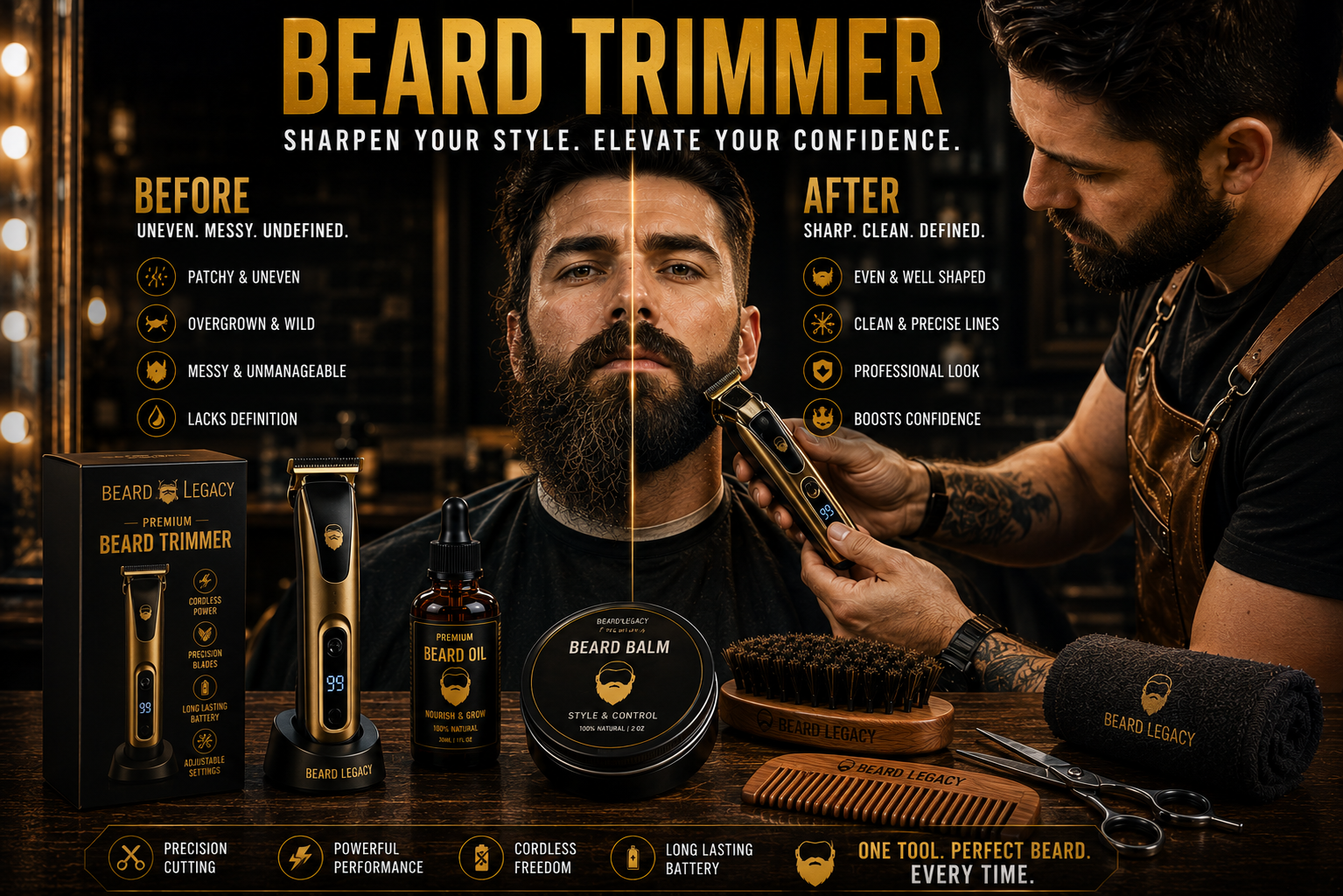
A complete beard grooming kit should include:
- Beard trimmer
- Beard scissors
- Wooden beard comb
- Boar bristle beard brush
- Beard oil
- Beard balm
- Hand mirror
- Good lighting
Using high-quality tools makes trimming easier and helps produce cleaner results.
Choosing the Right Beard Trimmer
A quality beard trimmer is one of the best investments for any bearded man.
Look for features such as:
- Stainless steel blades
- Adjustable length settings
- Long battery life
- Washable blades
- Comfortable grip
Modern beard trimmers also offer precision attachments that make shaping cheek lines and necklines much easier.
Step 1: Wash Your Beard First
Never trim a dirty beard.
Start by washing your beard with a dedicated beard shampoo.
This removes:
- Dirt
- Sweat
- Oil
- Product buildup
A clean beard is easier to comb and trim accurately.
After washing, gently towel dry your beard.
Step 2: Comb Your Beard
Use a wooden beard comb to detangle facial hair.
Comb downward in the direction of natural growth.
This helps:
- Reveal uneven areas
- Remove knots
- Prepare for trimming
Never trim a tangled beard.
Step 3: Start With a Longer Guard
One of the biggest beginner mistakes is trimming too short immediately.
Instead:
Start with the longest guard.
Trim gradually.
If necessary, switch to a shorter guard later.
Remember:
You can always remove more hair.
You cannot put it back.
Step 4: Trim With the Grain
Move the trimmer in the same direction your beard naturally grows.
This creates:
- More even results
- Less irritation
- Better control
Going against the grain removes significantly more hair and should be done cautiously if desired.
Step 5: Shape the Cheek Line
A natural cheek line usually looks better than an overly sharp one.
Remove only stray hairs above your natural beard line.
Avoid creating an unnaturally low cheek line, as it may make your beard appear smaller.
Step 6: Define the Neckline
One of the most important parts of beard grooming is creating the correct neckline.
A simple guideline:
Imagine a curved line running from one ear to the other, passing just above your Adam’s apple.
Everything below this line is typically trimmed.
A properly shaped neckline instantly improves the overall appearance of the beard.
Step 7: Trim the Mustache
Your mustache should complement your beard.
Use scissors or a precision trimmer to remove hairs that extend over the upper lip.
Trim conservatively.
Small adjustments often produce the cleanest results.
Step 8: Blend the Sideburns
A harsh transition between your haircut and beard often looks unnatural.
Blend gradually.
Many professional barbers recommend fading the sideburn area for a smoother transition between hair and beard. Clean fades and personalized shaping continue to be among the most popular grooming trends in 2026.
Beard Styles That Require Different Trimming Techniques
Short Boxed Beard
Requires:
- Sharp cheek lines
- Defined neckline
- Frequent maintenance
Full Beard
Focus on:
- Symmetry
- Removing split ends
- Keeping volume balanced
Stubble
Requires regular trimming to maintain an even length.
Fade Beard
Needs careful blending between the haircut and beard.
Long Beard
Focus on maintaining shape rather than reducing length.
How Often Should You Trim Your Beard?
The ideal schedule depends on your beard style.
Stubble
Every few days.
Short Beard
About once a week.
Medium Beard
Every one to two weeks.
Long Beard
Trim occasionally to maintain shape while preserving length.
Consistency matters more than aggressive trimming.
Beard Trimming Mistakes to Avoid
Trimming a Wet Beard
Wet hair often appears longer than it is.
Allow your beard to dry before final shaping.
Using Dull Blades
Sharp blades provide cleaner cuts and reduce hair pulling.
Keep your trimmer clean and maintain the blades according to the manufacturer’s recommendations.
Cutting Too Much at Once
Always trim gradually.
Small adjustments create better results.
Ignoring Beard Symmetry
Frequently step back from the mirror.
Check both sides before continuing.
Forgetting Beard Oil
After trimming, apply beard oil.
This helps condition facial hair while improving softness and shine.
Beard Care After Trimming
Once your trim is complete:
- Wash away loose hairs.
- Apply beard oil.
- Brush the beard.
- Use beard balm if additional styling is desired.
This routine helps your beard look polished immediately after trimming.
Why Beard Hydration Matters
Even the sharpest beard trim won’t look impressive if the beard feels dry.
Maintain hydration using:
- Beard oil
- Beard butter
- Beard conditioner
A healthy beard naturally appears fuller and more attractive.
Beard Grooming Trends in 2026
Professional beard grooming continues evolving.
Current trends include:
- Personalized beard styles
- Clean cheek lines
- Natural-looking fades
- Face-shape matching
- Premium grooming tools
- Multi-step beard care routines
Barbers increasingly recommend tailoring beard styles to face shape and lifestyle rather than following generic trends.
Professional Barber Tips
Experienced barbers recommend:
- Trim slowly.
- Use quality lighting.
- Check symmetry frequently.
- Maintain clean tools.
- Brush before every trim.
- Moisturize after grooming.
These habits consistently produce better-looking results.
Final Thoughts
A well-trimmed beard is one of the easiest ways to improve your appearance.
You don’t need advanced barber skills to maintain a sharp beard.
Instead, focus on:
- Using quality tools
- Trimming consistently
- Maintaining proper lines
- Keeping your beard hydrated
- Following a structured grooming routine
Combined with beard shampoo, beard oil, beard balm, beard conditioner, and regular brushing, proper trimming creates a beard that looks healthier, feels softer, and projects confidence.
Whether you prefer rugged stubble, a professional short boxed beard, or a long full beard, mastering the fundamentals of beard trimming will help you enjoy a cleaner, sharper, and more stylish look throughout 2026 and beyond.