

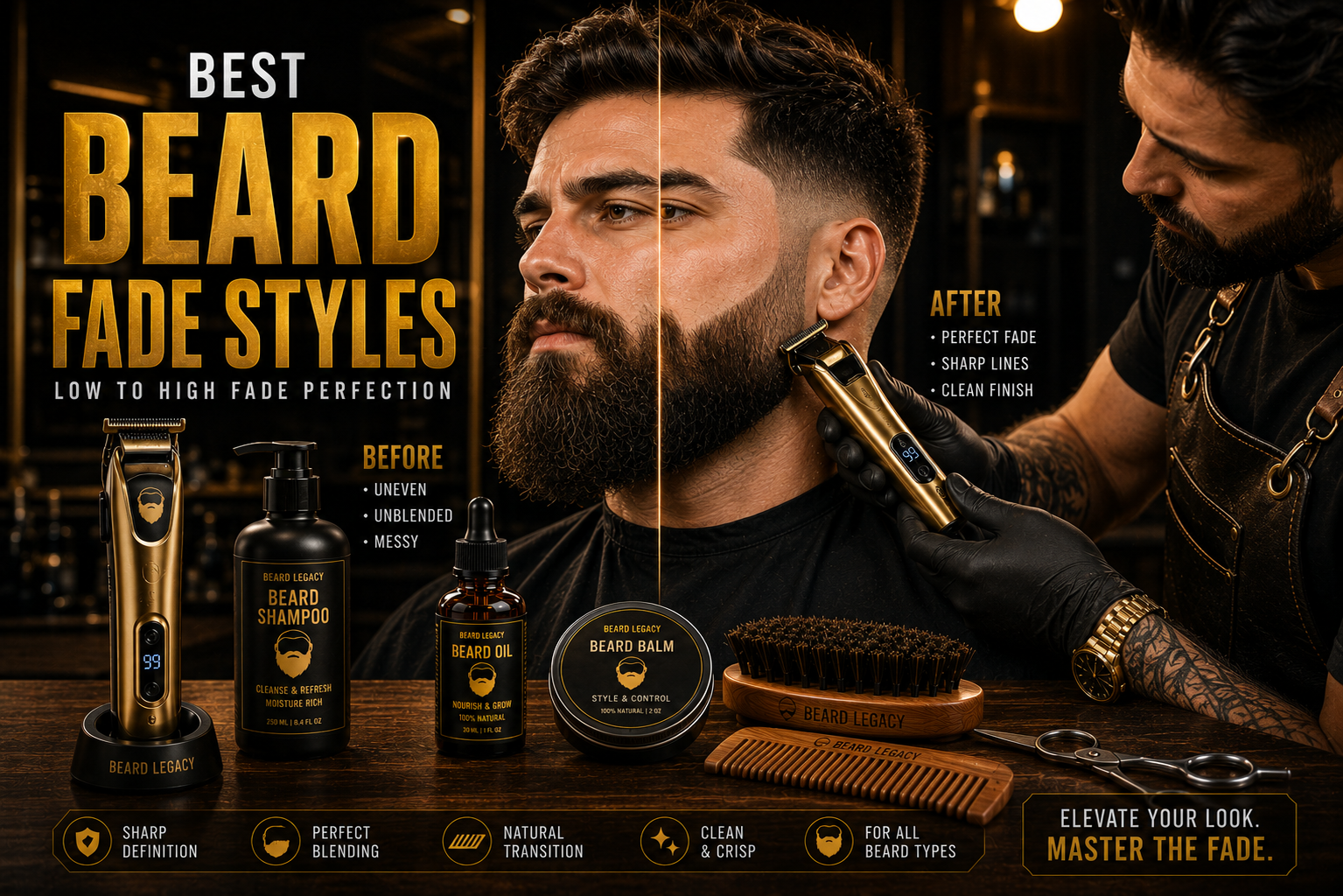
Introduction
A well-groomed beard has always been a symbol of confidence and masculinity, but in recent years one style has stood above the rest for its clean, modern, and professional appearance:
The Beard Fade.
Whether you’re walking into a business meeting, attending a wedding, going on a date, or creating content for social media, a properly executed beard fade instantly elevates your overall look.
Across Google, YouTube, Instagram, TikTok, and Pinterest, searches continue to rise for:
- Best beard fade styles
- Low beard fade
- High beard fade
- Taper beard fade
- Skin fade beard
- Professional beard styles
Barbers across the world continue recommending beard fades because they create a smooth transition between the haircut and facial hair while enhancing facial structure. Clean, personalized beard styles remain among the strongest men’s grooming trends in 2026.
Unlike traditional beard styles, a beard fade focuses on blending rather than creating harsh lines. The result is a beard that appears cleaner, sharper, and naturally connected to your haircut.
Whether you’re growing your first beard or maintaining a full, mature beard, understanding beard fades can dramatically improve your appearance.
This complete guide explains everything you need to know about beard fades, including the most popular styles, trimming techniques, maintenance tips, and how to choose the perfect fade for your face shape.
What Is a Beard Fade?
A beard fade is a grooming technique where the beard gradually transitions from shorter hair near the sideburns into longer facial hair around the jawline and chin.
Instead of creating one uniform length throughout the beard, barbers blend multiple lengths together.
The result is:
- Cleaner appearance
- Better symmetry
- More natural transition
- Professional finish
- Modern masculine style
A properly blended beard fade creates the illusion of a fuller and more sculpted beard.
Why Beard Fades Are So Popular
Modern men’s grooming has shifted toward styles that look intentional without appearing overdone.
A beard fade offers several advantages:
- Works with almost every haircut
- Flatters most face shapes
- Looks professional
- Adds definition
- Creates visual balance
- Photographs beautifully
Professional barbers increasingly personalize beard fades to match each client’s facial structure rather than following one standard design.
Types of Beard Fades
Low Beard Fade
The fade begins near the bottom of the sideburn.
Benefits:
- Conservative appearance
- Office-friendly
- Timeless style
- Easy maintenance
Ideal for professionals who prefer subtle grooming.
Mid Beard Fade
One of the most versatile options.
The fade begins around the middle of the ear.
Advantages:
- Balanced proportions
- Modern appearance
- Suitable for most hairstyles
- Excellent versatility
This remains one of the most requested beard fades in barbershops.
High Beard Fade
The fade starts higher near the temple.
Creates:
- Bold appearance
- Strong facial definition
- Modern aesthetic
- Dramatic contrast
Excellent for fashion-forward styles.
Skin Fade Beard
The beard transitions from shaved skin into gradually increasing lengths.
Produces:
- Extremely clean finish
- Sharp definition
- High contrast
- Premium barbershop appearance
Requires more frequent maintenance.
Taper Beard Fade
Unlike a dramatic fade, taper fades create softer transitions.
Benefits include:
- Natural appearance
- Elegant styling
- Professional versatility
Perfect for everyday grooming.
Choosing the Right Beard Fade for Your Face Shape
Round Face
A slightly longer chin area combined with faded sides helps create the appearance of additional length.
Square Face
A soft beard fade enhances the jawline without making it appear overly angular.
Oval Face
Almost every beard fade style works well.
This face shape offers maximum flexibility.
Diamond Face
Keeping more fullness around the jaw helps balance facial proportions.
Rectangular Face
Avoid making the beard excessively long.
Balanced proportions usually produce the most flattering appearance.
Haircuts That Pair Perfectly with Beard Fades
A beard fade complements numerous hairstyles.
Popular combinations include:
- Skin fade haircut
- Low taper fade
- Mid fade haircut
- Crew cut
- Buzz cut
- Pompadour
- Slick back
- Textured crop
- Quiff
- Side part
Matching the beard fade with the haircut creates a polished overall appearance.
Tools Needed for a Perfect Beard Fade
Professional results require quality equipment.
Essential tools include:
- Professional beard trimmer
- Adjustable clipper guards
- Precision detail trimmer
- Beard scissors
- Wooden beard comb
- Beard brush
- Hand mirror
- Good lighting
High-quality tools improve accuracy while reducing uneven trimming.
How Professional Barbers Create Beard Fades
Most barbers follow a gradual blending technique.
Step 1
Comb the beard thoroughly.
Step 2
Establish the longest beard length.
Step 3
Reduce clipper guards gradually moving upward.
Step 4
Blend each transition carefully.
Step 5
Shape the neckline.
Step 6
Define the cheek line.
Step 7
Trim the mustache.
Step 8
Check symmetry from multiple angles.
Professional beard fades rely on gradual transitions rather than visible steps between lengths.
Beard Fade Maintenance
A beard fade looks best when maintained consistently.
General maintenance includes:
- Brushing daily
- Applying beard oil
- Trimming stray hairs
- Cleaning cheek lines
- Maintaining the neckline
Sharper fades typically require more frequent touch-ups than longer natural beards.
Beard Oil for Faded Beards
A beard fade still requires hydration.
Quality beard oil helps:
- Soften facial hair
- Improve shine
- Reduce dryness
- Condition the skin underneath
Consumers increasingly prefer beard oils formulated with natural ingredients such as jojoba, argan, and shea-based blends.
Beard Balm for Better Definition
After shaping the beard, beard balm helps:
- Hold the style
- Control flyaways
- Improve structure
- Maintain definition
This is especially useful for medium and long beard fades.
Common Beard Fade Mistakes
Starting Too High
An excessively high fade may throw off facial proportions.
Blend gradually.
Skipping the Neckline
Even the best fade looks incomplete without a clean neckline.
Using Only One Guard
Professional fades rely on multiple clipper lengths.
Blending creates the signature look.
Ignoring Beard Hydration
Dry beards never look premium.
Hydration is essential.
Forgetting the Mustache
The mustache should blend naturally with the beard.
Building the Perfect Beard Fade Routine
Morning
- Wash beard if necessary.
- Apply beard oil.
- Brush the beard.
- Apply beard balm if needed.
Weekly
- Clean cheek lines.
- Refresh the fade.
- Trim stray hairs.
- Clean grooming tools.
Consistency is the secret to maintaining a fresh fade.
Beard Fade Trends in 2026
Modern grooming continues moving toward personalized beard styling.
Popular trends include:
- Natural-looking fades
- Soft taper transitions
- Skin fade beards
- Precision cheek lines
- Personalized beard shaping
- Premium grooming routines
Industry reports also highlight growing consumer demand for premium beard styling products and personalized grooming experiences.
Why Barbers Recommend Beard Fades
Professional barbers often recommend beard fades because they:
- Frame the face
- Enhance jawlines
- Blend naturally with haircuts
- Look modern
- Suit many lifestyles
Whether you work in an office or enjoy a more casual look, a beard fade can be adapted to fit your personal style.
Final Thoughts
A beard fade is more than just a grooming trend—it’s one of the most effective ways to create a clean, stylish, and confident appearance.
By combining:
- Proper blending
- Regular trimming
- Beard oil
- Beard balm
- Beard brushing
- Consistent maintenance
you can maintain a beard that looks professionally groomed every day.
Whether you prefer a subtle taper, a dramatic skin fade, or a classic low beard fade, this timeless grooming technique continues to define modern men’s style in 2026.
For men who want a beard that looks sharp in every setting—from the office to special occasions—a well-executed beard fade remains one of the smartest grooming choices available.