

Introduction
One of the biggest questions every man asks after putting down the razor is:
“How long does it actually take to grow a great beard?”
The answer isn’t the same for everyone.
Some men notice thick stubble within a few days, while others experience slower or less dense growth. Beard development is influenced by genetics, hormones, age, ethnicity, and individual hair growth patterns.
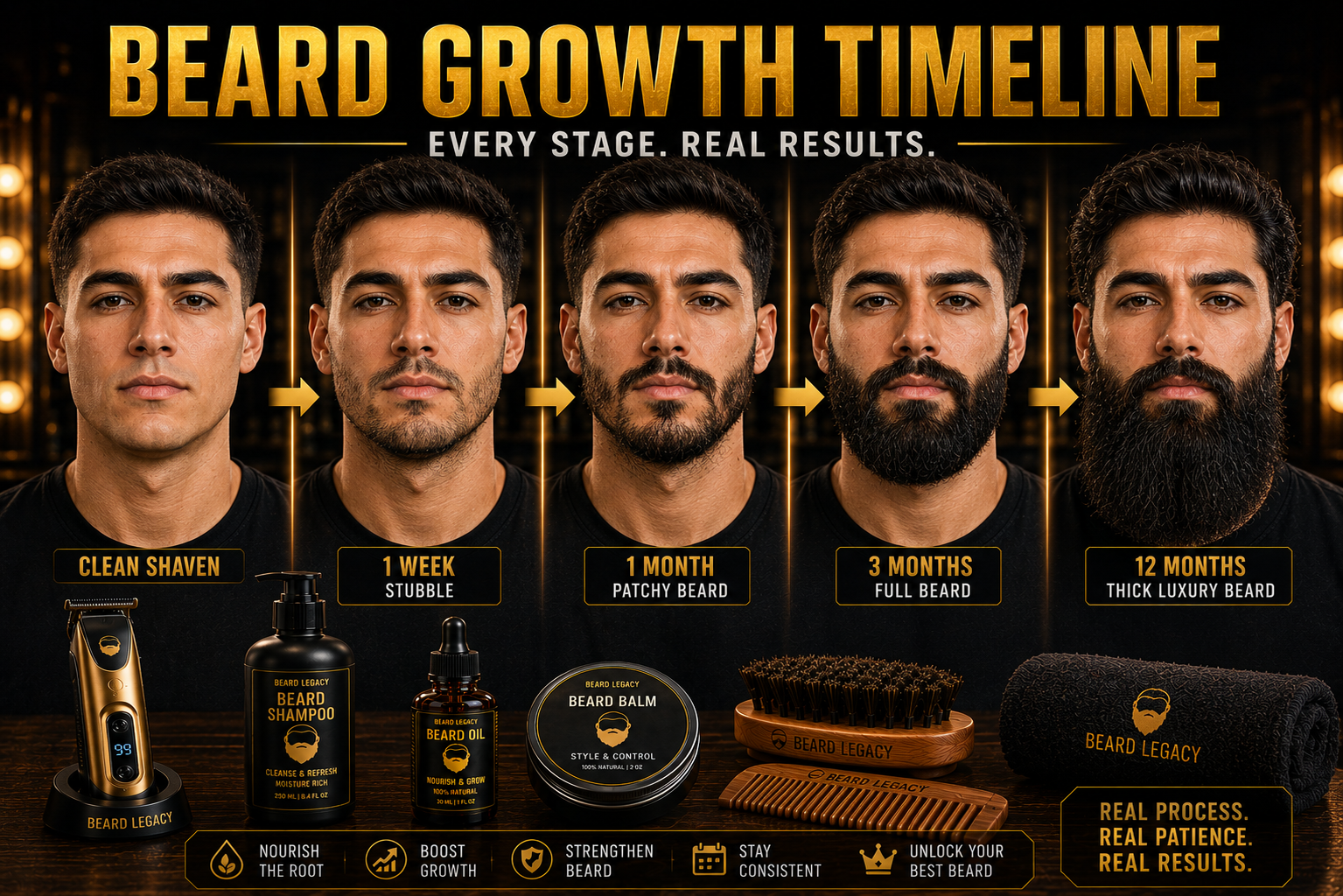
Despite these differences, most beards follow a similar progression through several recognizable stages.
Searches such as:
- Beard growth timeline
- Beard growth stages
- Beard growth week by week
- How long does it take to grow a beard?
- Beard growth guide
- Beard grooming routine
continue trending across Google, YouTube, TikTok, Reddit, and Pinterest because millions of men want realistic expectations instead of overnight transformation promises.
Professional barbers increasingly recommend allowing the beard enough uninterrupted growth before deciding on its final style, since many uneven areas naturally become less noticeable over time.
This complete guide explains what typically happens during each stage of beard growth, how to care for your beard throughout the journey, and how to avoid the common mistakes that cause many men to shave too early.
Why Every Beard Grows Differently
Before discussing timelines, it’s important to understand that no two beards grow exactly alike.
Several factors influence beard growth, including:
- Genetics
- Age
- Testosterone and hormone sensitivity
- Hair texture
- Ethnicity
- Overall health
These differences mean that comparing your beard with someone else’s often creates unrealistic expectations.
The goal isn’t to copy another beard—it’s to maximize your own.
Stage 1: Day 1–7 (The Stubble Phase)
During the first week, you’ll usually notice:
- Light stubble
- Slight roughness
- Different growth speeds across the face
Many men discover that:
- Their chin grows faster
- Mustache develops first
- Cheeks grow slower
- Neck grows quickly
This is completely normal.
Grooming Tips
During this stage:
- Wash your face daily.
- Keep skin moisturized.
- Avoid shaving out of impatience.
- Let the beard establish its natural growth pattern.
Stage 2: Week 2
The beard begins becoming more noticeable.
You may observe:
- Increased coverage
- Rougher texture
- Early beard itch
This is the stage where many men become frustrated.
Why Beard Itch Happens
As facial hair becomes longer, it begins rubbing against the skin.
Combined with dry skin, this often causes irritation.
A quality beard oil helps moisturize:
- Facial hair
- Skin underneath
This greatly improves comfort.
Stage 3: Weeks 3–4
This is often called the awkward stage.
The beard may appear:
- Uneven
- Patchy
- Puffy
- Untidy
Many men mistakenly believe their beard will always look this way.
Fortunately, that’s rarely true.
Professional barbers often encourage clients to avoid major trimming during this stage unless absolutely necessary.
Don’t Judge Your Beard Too Early
One of the biggest grooming mistakes is evaluating your beard after only three or four weeks.
Shorter hairs haven’t yet had enough time to blend with slower-growing areas.
Patience is one of the most valuable beard-growing tools.
Month 2: Building Real Shape
By the second month, your beard usually begins looking more intentional.
You’ll likely notice:
- Better coverage
- Improved fullness
- Softer appearance
- More styling options
Patchy areas often become less obvious as surrounding hair grows longer.
Start Using Beard Conditioner
As beard length increases, conditioning becomes increasingly important.
Benefits include:
- Improved softness
- Reduced dryness
- Easier brushing
- Better texture
Conditioned facial hair also looks healthier.
Month 3: The True Beard Begins
Around three months, many men finally achieve what most people recognize as a “full beard.”
The beard now has:
- Defined shape
- Noticeable volume
- Better density
- Improved symmetry
This is often a great time for your first professional beard shaping if desired.
Month 4–5: Refinement Stage
Growth begins slowing visually.
The beard becomes:
- Heavier
- Fuller
- Easier to shape
Instead of focusing on length, attention shifts toward grooming.
This includes:
- Neckline
- Cheek line
- Mustache
- Symmetry
Why Regular Trimming Matters
Trimming doesn’t make the beard grow faster.
Instead, it helps:
- Remove split ends
- Improve shape
- Maintain symmetry
- Keep the beard looking healthy
Small maintenance trims create cleaner results than aggressive cutting.
Month 6: Mature Beard Stage
By six months, many men have enough length for various beard styles.
Popular choices include:
- Corporate beard
- Full beard
- Beard fade
- Garibaldi
- Ducktail beard
- Extended boxed beard
The beard now becomes highly customizable.
Month 7–9: Increased Volume
Longer facial hair begins creating impressive volume.
At this stage, daily grooming becomes increasingly important.
A typical routine includes:
- Beard shampoo
- Beard conditioner
- Beard oil
- Beard balm
- Beard brush
Consistency keeps longer beards manageable.
Month 10–12: Long Beard Stage
Around one year, many men have developed a substantial beard.
Length now allows:
- Premium styling
- Braiding
- Advanced shaping
- Sculpted beard styles
Maintenance becomes more important than growth.
Weekly Beard Care Routine
Daily
- Wash beard when needed.
- Apply beard oil.
- Brush the beard.
- Apply beard balm if styling.
Weekly
- Trim stray hairs.
- Exfoliate beneath the beard.
- Clean grooming tools.
- Inspect for split ends.
Small consistent habits outperform occasional intensive grooming.
Beard Growth Myths
Myth 1: Shaving Makes Beards Grow Faster
False.
Shaving removes hair above the skin.
It does not affect the growth rate of hair follicles.
Myth 2: Beard Oil Creates New Hair
False.
Beard oil conditions existing facial hair.
It helps improve softness, comfort, and appearance.
It does not create new follicles.
Myth 3: Everyone Can Grow the Same Beard
False.
Every man’s beard develops differently.
Your natural growth pattern is unique.
Healthy Habits That Support Beard Quality
Although genetics play the biggest role, healthy lifestyle habits support overall skin and hair health.
These include:
- Balanced nutrition
- Regular exercise
- Good sleep
- Stress management
- Adequate hydration
Healthy skin creates a better environment for beard care.
Essential Beard Grooming Products
A complete beard care routine may include:
- Beard shampoo
- Beard conditioner
- Beard oil
- Beard balm
- Beard butter
- Beard brush
- Wooden beard comb
- Beard trimmer
- Beard scissors
Each product serves a different purpose.
Common Beard Growth Mistakes
Shaving During the Awkward Stage
The biggest mistake of all.
Give your beard enough time.
Ignoring Skin Care
Healthy beards begin with healthy skin.
Never Brushing
Daily brushing improves:
- Shape
- Oil distribution
- Beard training
Using Hair Shampoo
Dedicated beard shampoo is designed specifically for facial hair.
Comparing Your Beard to Others
Focus on maximizing your own beard.
Every beard grows differently.
Beard Trends in 2026
Today’s grooming trends emphasize:
- Natural density
- Healthy texture
- Personalized beard styles
- Professional shaping
- Multi-step grooming routines
- Premium beard care products
Rather than chasing extreme styles, more men are choosing beard shapes that complement their face and natural growth pattern while maintaining healthy, well-conditioned facial hair.
When Should You Visit a Barber?
Consider seeing a professional barber when:
- Your beard reaches two to three months.
- You want a beard fade.
- You need help shaping the neckline.
- You want to define cheek lines.
- You’re transitioning to a longer beard style.
A professional shaping session can provide a template that’s easier to maintain at home.
Final Thoughts
Growing a great beard is a journey—not a race.
Every stage serves a purpose, from the first week of stubble to a full year of growth.
Instead of chasing unrealistic promises, focus on:
- Consistent grooming
- Proper hydration
- Quality beard products
- Smart trimming
- Patience
Combined with beard shampoo, beard conditioner, beard oil, beard balm, regular brushing, and occasional professional shaping, these habits help you build a beard that looks healthier, feels softer, and reflects your personal style.
In 2026, the best beards aren’t necessarily the longest—they’re the ones that are well cared for, thoughtfully maintained, and worn with confidence.