

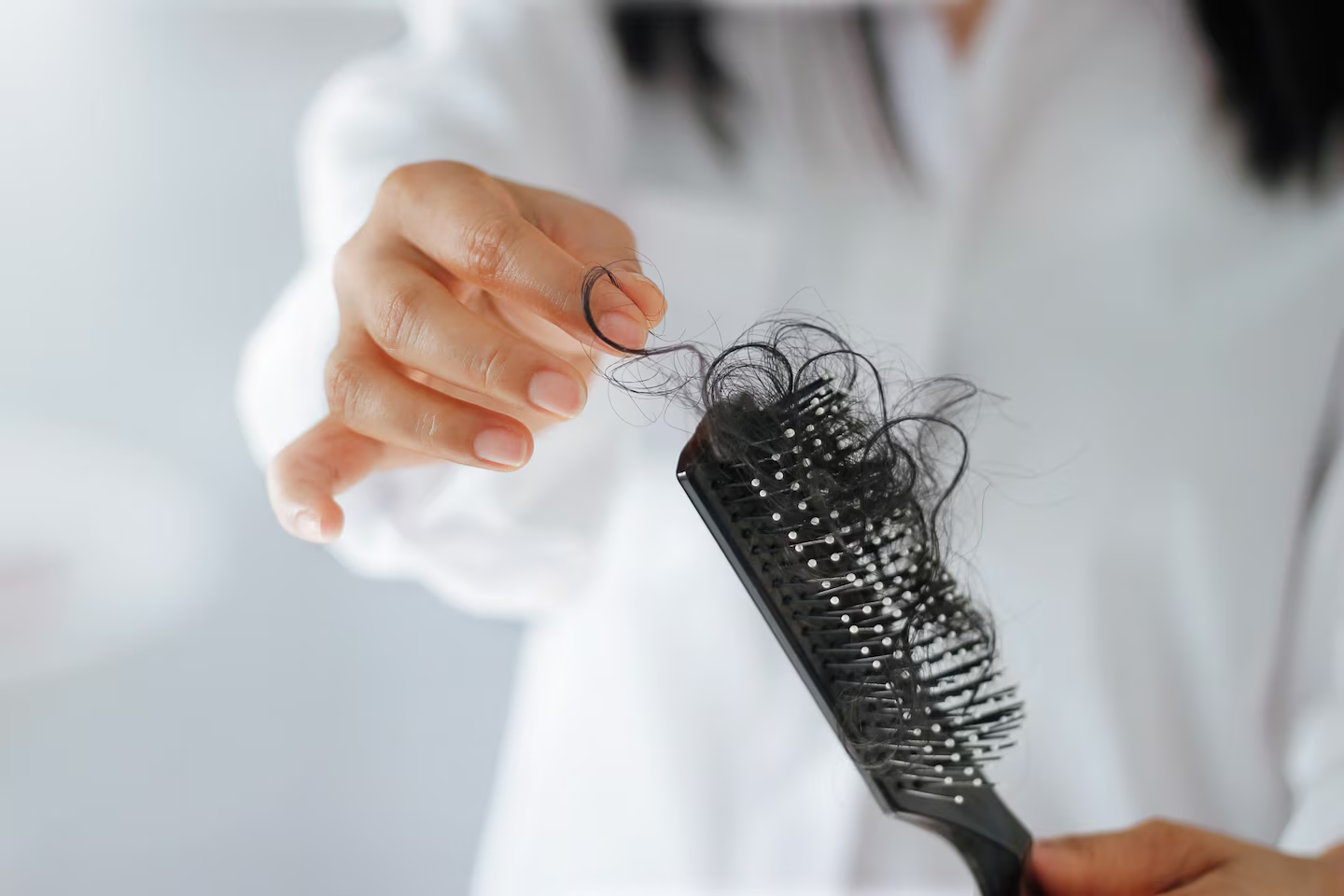

The Washington Post interviewed five dermatologists about some of the most common causes of hair loss and the evidence-backed treatments that may help regrow your hair.
Patterned hair loss
Also known as androgenetic alopecia, patterned hair loss is hereditary and leads to progressively finer, thinner hair in men and women as they age. It’s also the most common form of hair loss, said Paradi Mirmirani, a dermatologist and hair disorder specialist at Kaiser Permanente in Vallejo, California.
“Genes drive a lot of what happens to the hair,” said Mirmirani, who’s also an adviser to several pharmaceutical companies that develop hair-loss treatments.
Diffuse hair loss
Also known as telogen effluvium, this hair loss can occur after an illness, infection, pregnancy, surgery or another stressful event. The shedding can last for six to nine months before the hair recovers, Gonzalez said.
Some people taking GLP-1 medications have reported hair loss, but it’s not clear why that may happen, said Carolyn Goh, a clinical professor of dermatology at UCLA Health. It could be because of rapid weight loss, a change in diet or multiple confounding factors.
Focal hair loss
This type of patchy hair loss can happen because of an autoimmune condition known as alopecia areata. (In rare cases, hair loss due to the immune response can be more extensive, causing all hair, including eyelashes, to fall out.)
And certain hairstyles, such as tight ponytails, braids and hair extensions can cause something known as traction alopecia, which can lead to tension-related damage to hair follicles, and hair loss, Gonzalez said.
When should I see a dermatologist?
If you notice you’re shedding more hair than usual, or your scalp is burning or itching, schedule an appointment with a board-certified dermatologist, Goh said.
“It’s hard to figure out which type of hair loss someone has unless they see a dermatologist,” Lipner said. “And time is really of the essence.”
What treatments actually work?
The best treatment will depend on a person’s type of hair loss as well as their age, gender, lifestyle, medications they’re already taking and other health conditions they may have, dermatologists said.
For many people with alopecia areata, the autoimmune condition, hair can grow back, particularly if the hair loss is mild, Gonzalez said. But dermatologists can inject a steroid or use ointments on the affected areas to help treat the inflammation.
Other treatments that may help people with alopecia areata or other types of hair loss include:
Topical minoxidil
Better known by the brand-name Rogaine, topical minoxidil is a well-studied and effective treatment available by prescription and over-the-counter that stimulates new hair growth.


“Think of it like fertilizer,” Mirmirani said. “It grows hair everywhere.”
Oral minoxidil
Traditionally used to treat high blood pressure, oral minoxidil is also prescribed off-label for hair loss.
Patients sometimes prefer to take minoxidil in a pill or tablet because it’s easier than applying a topical to their hair twice a day, Goh said.
And a topical treatment on the scalp may not work as well for someone who puts gel or other cosmetics in their hair every morning, Lipner said.
Low-dose minoxidil has been found to be safe and effective for hair loss but the drug can lead to an increased heart rate, swelling in the ankles and feet, heart failure or a sharp drop in blood pressure, Lipner said.
Oral finasteride
This antiandrogen medication is FDA-approved for men and stops the thinning of hair follicles, Mirmirani said. Dermatologists also prescribe finasteride off-label for women, but it hasn’t been as well studied, Goh said.
And finasteride can cause some sexual side effects, Lipner said, but sometimes the benefits outweigh the risks for patients.
Spironolactone
Another antiandrogen medication, spironolactone, can be used off-label for younger women, Goh said.
And there are other supplementary procedures dermatologists use to boost the effectiveness of medications, such as platelet-rich plasma injections and low-frequency red light therapy, Mirmirani said.
Most treatments take six months to a year to work, Goh said. And, for pregnant women, “there’s really no safe treatment for hair loss.”
Why don’t hair-loss medications work for everyone?
In the simplest of terms, hair follicles on the scalp are either intact — and the hair can grow back — or they’ve been destroyed, said Antonella Tosti, a professor of dermatology at the University of Miami.
Once hair follicles are irreparably damaged (also known as scarred), there’s not much that can be done besides a transplant, moving hair follicles from one part of the scalp to another, Lipner said.
“But keep in mind, hair transplants aren’t simple either,” Lipner said. Once you get a hair transplant, you’re going to have to regularly take a medication to maintain the hair.
What treatments have less evidence?
Biotin supplements are touted for healthy hair, but there’s no good evidence that the vitamin helps with hair loss, Lipner said. “Unless you’re deficient,” she said. “And that’s extremely rare.”
Biotin can also interfere with lab tests that physicians use to diagnose a heart attack. Because of this, Lipner recommends her patients steer clear of supplements with high doses of biotin.
“There is even less regulation over supplements and cosmetic products,” Goh said. “They don’t have to pass the same safety standards as medications do.”
Start with building healthy habits — regular exercise, better nutrition and getting enough sleep — before buying a supplement or multivitamin, Mirmirani said.
“It’s hard to prevent genetics,” she said. “But the things that you can change are those healthy habits.”